
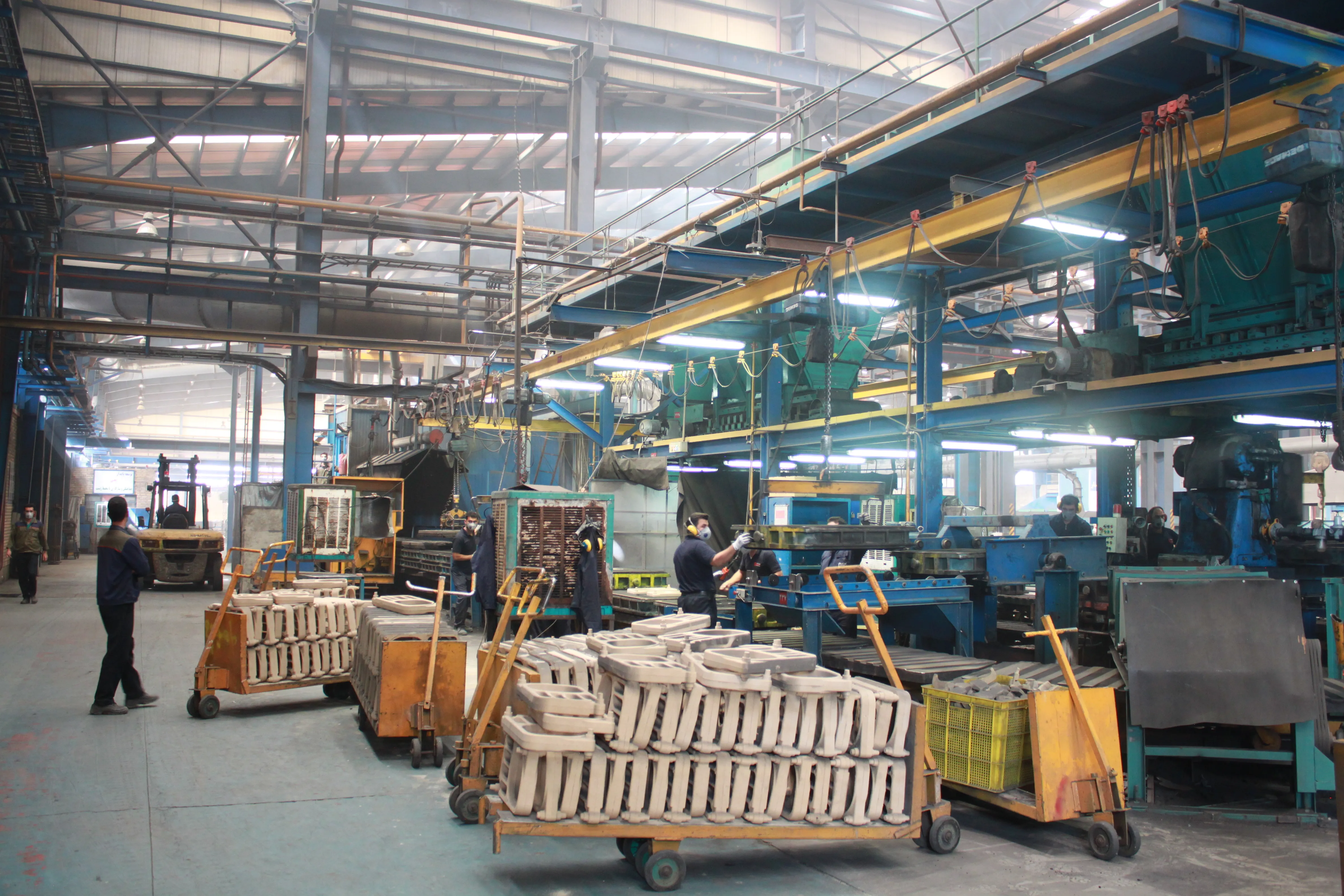
Gratings
Sewerage Grating
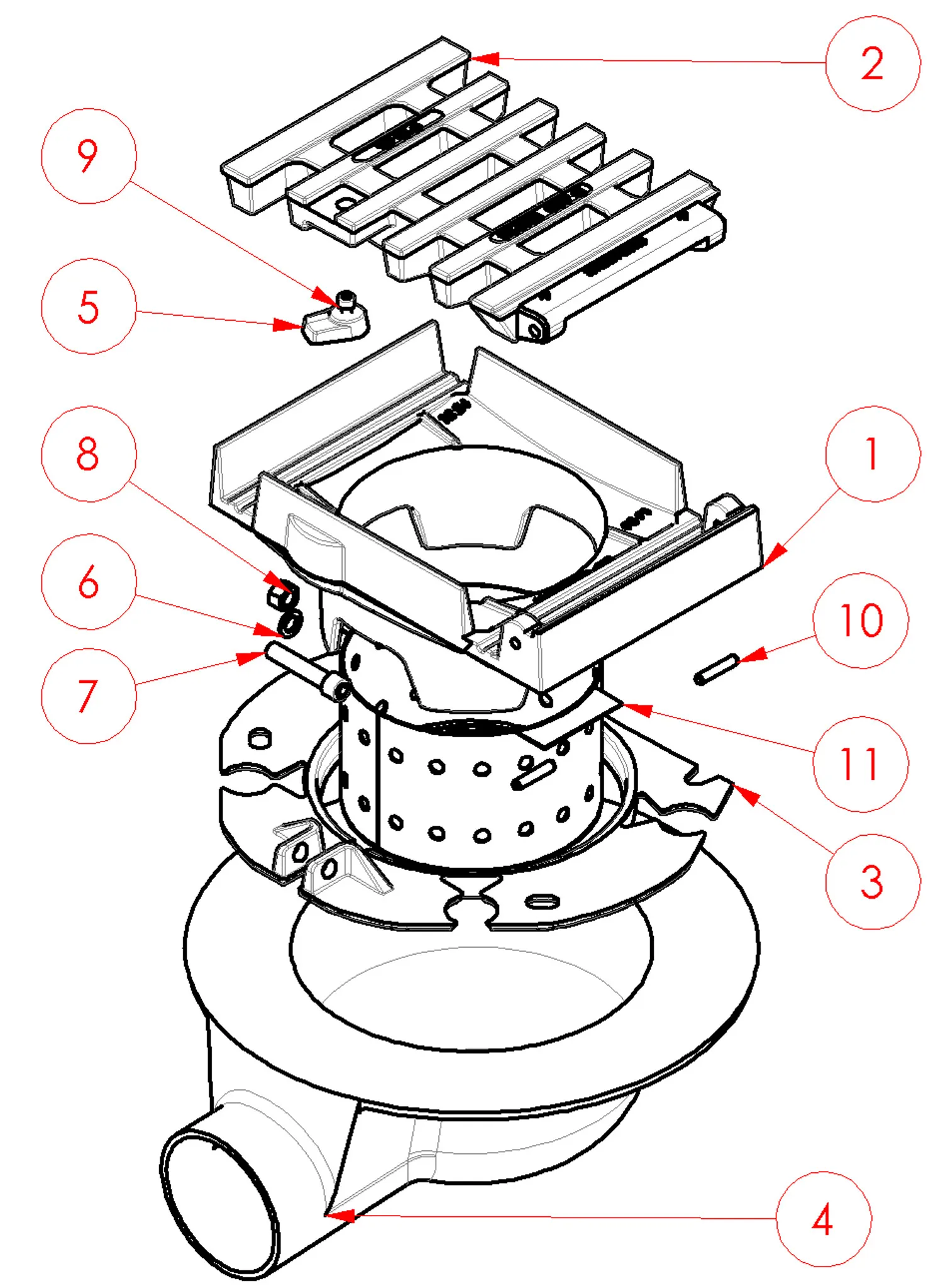
A round-bodied road gully with a horizontal outlet, grate and frame assembled as one unit, EN 124-2 D400.
Sewerage Grating
Ductile iron, EN 124 D400
Where a gully grating covers an opening, this is the gully itself. The round body collects the flow and discharges it sideways through a horizontal spigot, so the connection runs out to the sewer at shallow depth rather than dropping vertically — which is what makes it usable under a road where cover is tight. The grate is cast D400 for carriageway duty and locks into the frame, and the whole thing ships assembled: castings, stainless steel fixings and a galvanized water gish.
- Material
- Ductile iron EN-GJS-500-7 (GGG50), stainless steel fixings
- Standard
- EN 124-2 D400
- Construction
- Eleven-part assembly, supplied assembled
- Outlet
- Ø159 horizontal spigot, 610 mm overall length
- Grate seating
- 92 mm into the frame
- Tolerance
- ISO 2768-mK
Specifications
1 size, 1 load class
Dimensions in millimetres. Sizes outside this range are produced to order.
International range
| Reference | Frame outer(mm) | Overall depth(mm) | Outlet(mm) | Load class(EN 124) | Weight(kg) | Drawing |
|---|---|---|---|---|---|---|
| Art 440 H | Ø549 | 304 | Ø159 | D400 | — | 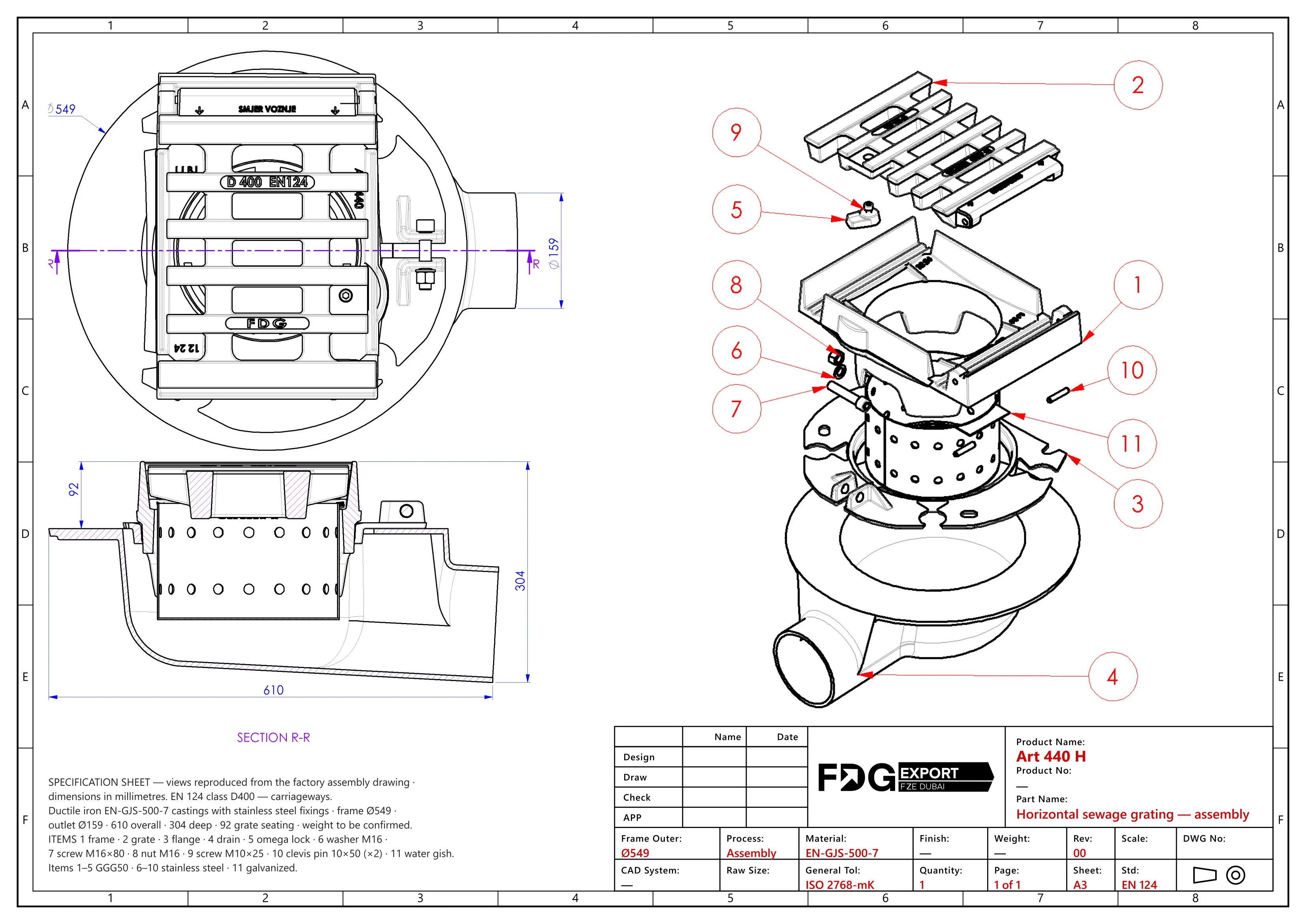 Preview only — contact us for the full drawing or DWG Preview only — contact us for the full drawing or DWG |
One item to EN 124-2, assembled from eleven parts — frame, grate, flange and drain body in EN-GJS-500-7 ductile iron, an omega lock, stainless steel fixings and a galvanized water gish. 610 mm overall from the frame edge to the end of the outlet spigot; the grate seats 92 mm into the frame. The assembled weight is being confirmed with the foundry and is not published until it is. Full drawings and DWG files are available on request.
Common questions
Specifying gratings
- How is this different from a gully grating?
- A gully grating is the top only — a grate and frame over an opening. This is the complete gully: a round body that collects the flow and discharges it through a horizontal outlet, with the grate and frame built onto it. You specify it where the chamber itself is part of the supply rather than built on site.
- Why a horizontal outlet rather than a vertical one?
- It keeps the connection shallow. A side discharge runs out to the sewer without needing the depth a vertical drop demands, which matters under a carriageway where cover between the surface and the services below is tight.
- What load class is it?
- EN 124-2 D400, cast into the grate face, rated for a 40 tonne test load. That is the carriageway class, so it can sit in the running surface of a road.
- Does it arrive assembled?
- Yes. The four ductile iron castings, the omega lock, the stainless steel fixings and the galvanized water gish are supplied as one item, so there is nothing to collate on site.