
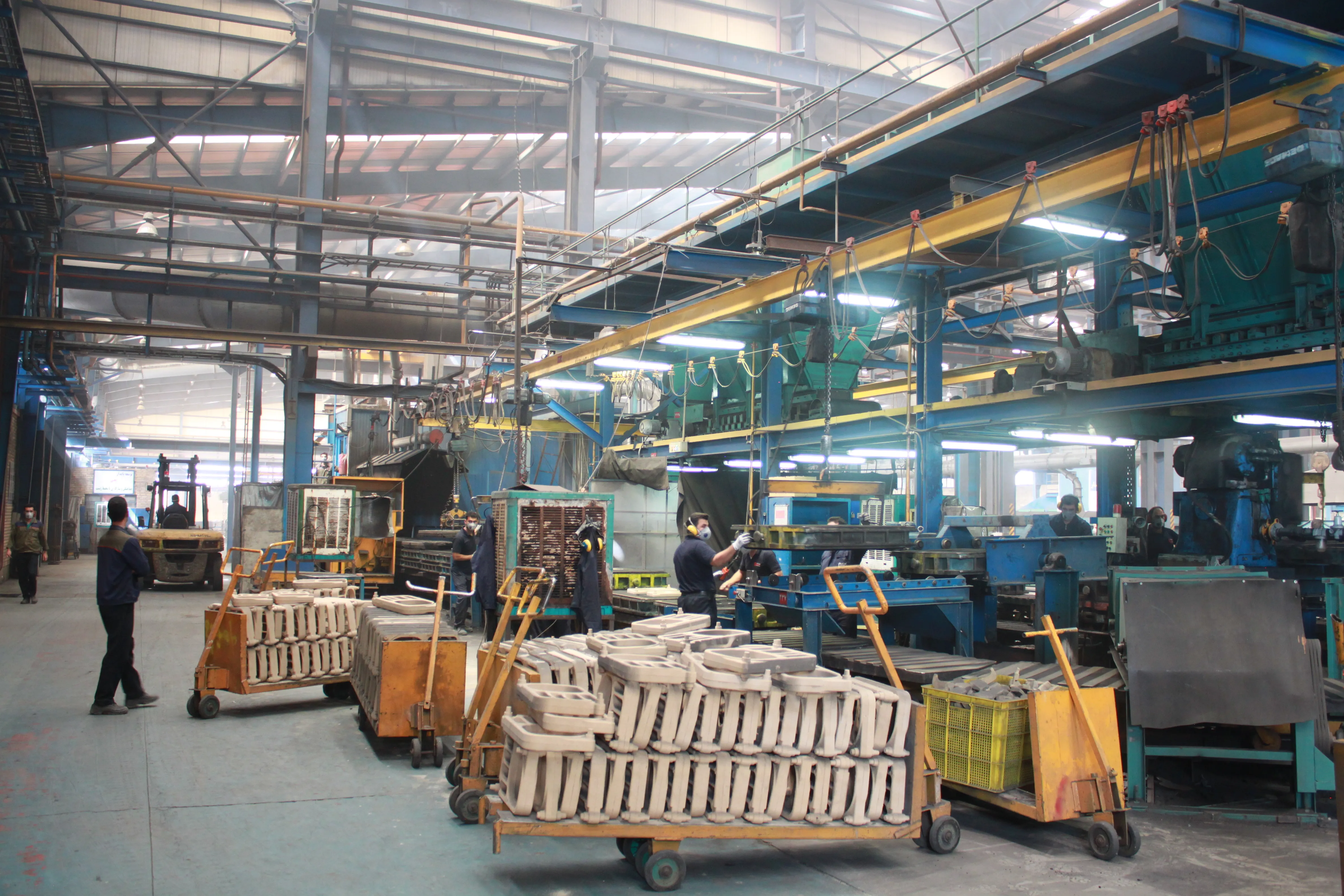
Gratings
Flat Gully Gratings
Flat-topped gully gratings for carriageway duty, in three sizes, all EN 124-2 D400.
Flat Gully Gratings
Ductile iron, EN 124 D400
The flat range sits level with the running surface, which is what a carriageway needs: nothing dished for a wheel to drop into and nothing standing proud of the asphalt. All three sizes are cast to EN 124-2 D400, the 40 tonne carriageway class, and run deeper than the concave range at 80 mm overall to carry that load. Supplied as a grating and frame assembly.
- Material
- Ductile iron EN-GJS-500-7 (GGG50)
- Standard
- EN 124-2 D400
- Format
- Flat grating seated in a square frame
- Finish
- Bitumen coated
- Tolerance
- ISO 2768-cL
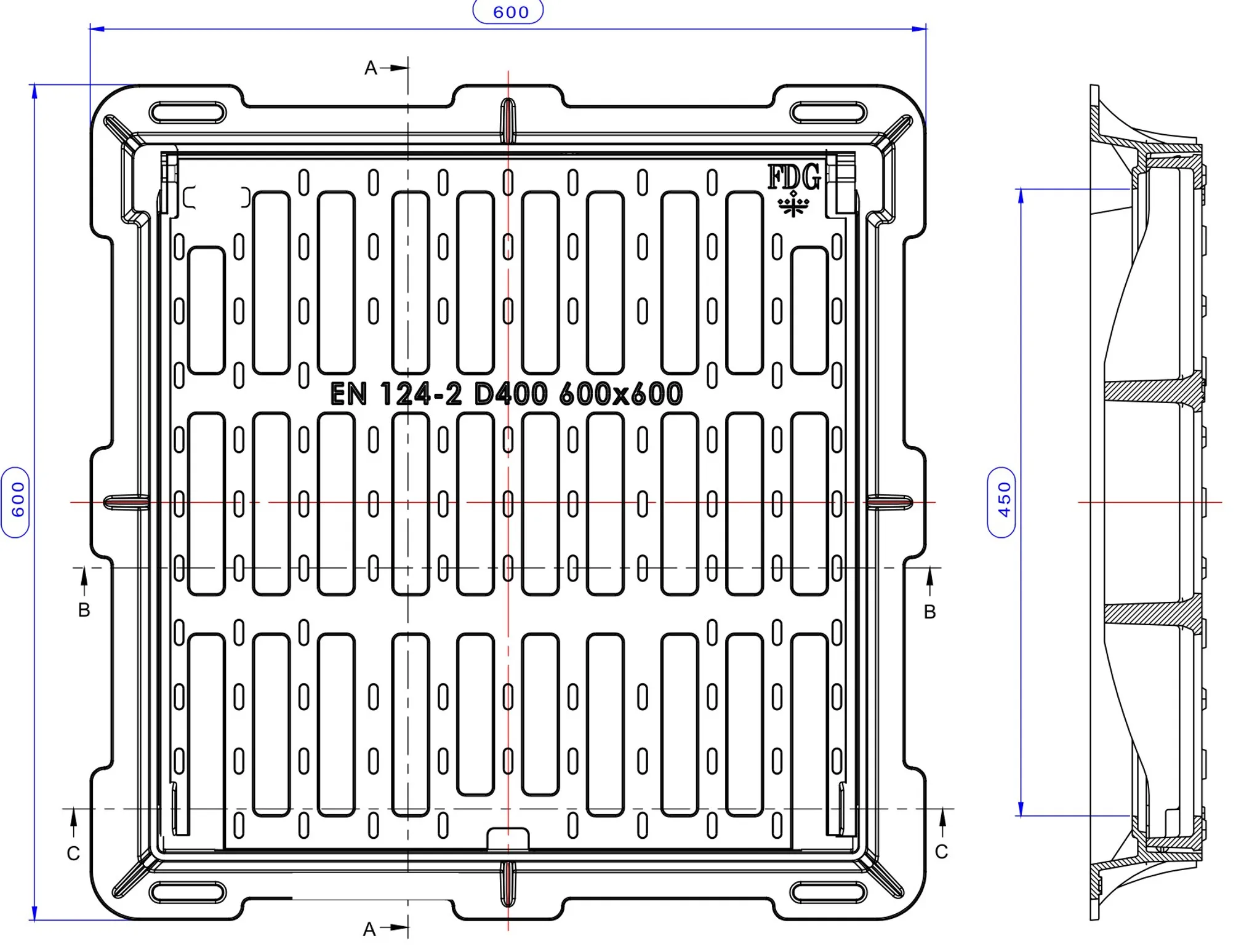
Specifications
3 sizes, 1 load class
Dimensions in millimetres. Sizes outside this range are produced to order.
International range
| Reference | Clear opening(mm) | Frame outer(mm) | Frame depth(mm) | Load class(EN 124) | Weight(kg) | Drawing |
|---|---|---|---|---|---|---|
| FDGF-500 | 350 × 350 | 500 × 500 | 80 | D400 | 25.7 | 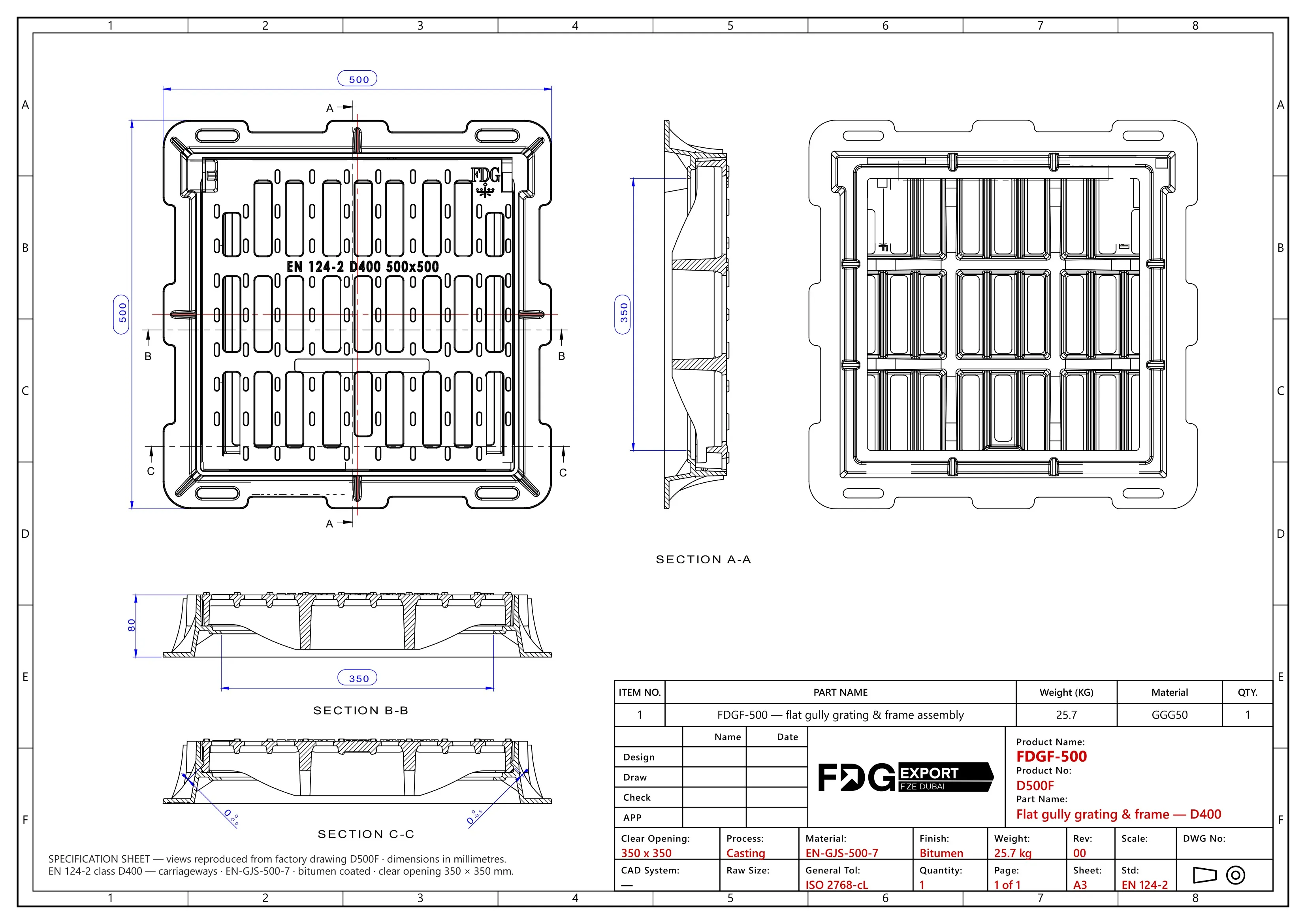 Preview only — contact us for the full drawing or DWG Preview only — contact us for the full drawing or DWG |
| FDGF-600 | 450 × 450 | 600 × 600 | 80 | D400 | 34.5 | 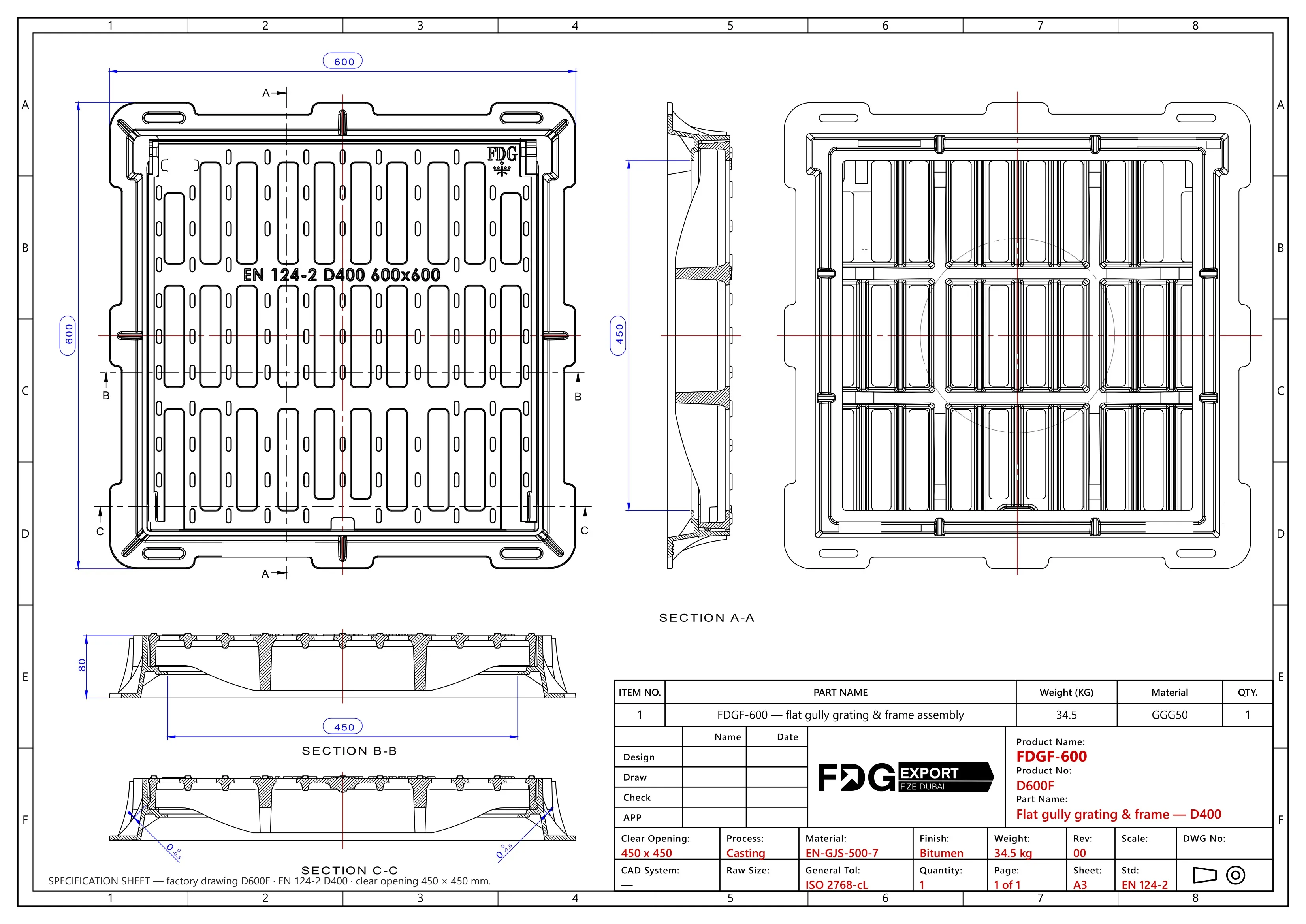 Preview only — contact us for the full drawing or DWG Preview only — contact us for the full drawing or DWG |
| FDGF-700 | 550 × 550 | 700 × 700 | 80 | D400 | 46.8 | 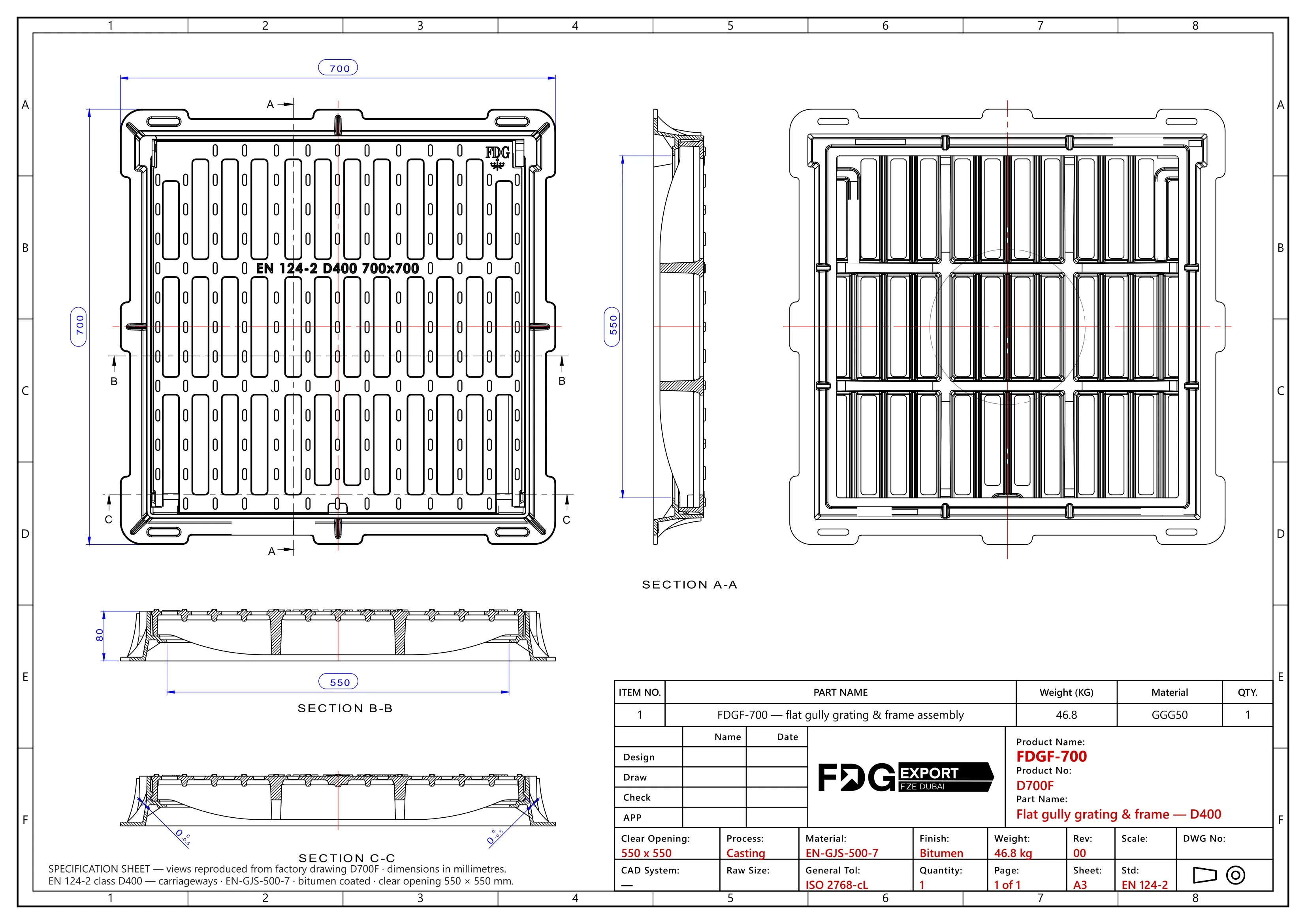 Preview only — contact us for the full drawing or DWG Preview only — contact us for the full drawing or DWG |
Three models to EN 124-2, grating and frame supplied as an assembly, EN-GJS-500-7 ductile iron, bitumen coated. Models are named for their nominal size and the frame outer given here is the measured plan dimension, which on this range matches the nominal exactly. Frame depth is the overall installed depth read from the section. Full drawings and DWG files are available on request.
Common questions
Specifying gratings
- What is the difference between the flat and concave ranges?
- The face. A flat grating sits level with the surface around it and is the carriageway option at D400; a concave grating is dished to funnel kerbside flow into the opening and is published at C250. Choose by where the water arrives from and what traffic runs over it.
- What load class are these?
- EN 124-2 D400 throughout, rated for a 40 tonne test load. That is the carriageway class, so these can sit in the running surface of a road rather than only in the gutter.
- Why are these deeper than the concave range?
- Depth is what carries the load. The flat range runs 80 mm overall against 60 to 65 mm on the C250 concave range, which is what takes it from the 25 tonne class to the 40 tonne one. Allow for the full 80 mm when detailing the chamber.
- Can you supply sizes other than those listed?
- Yes. The published sizes are the standard range; other clear openings are produced to order.