
Gratings
Edge Grating
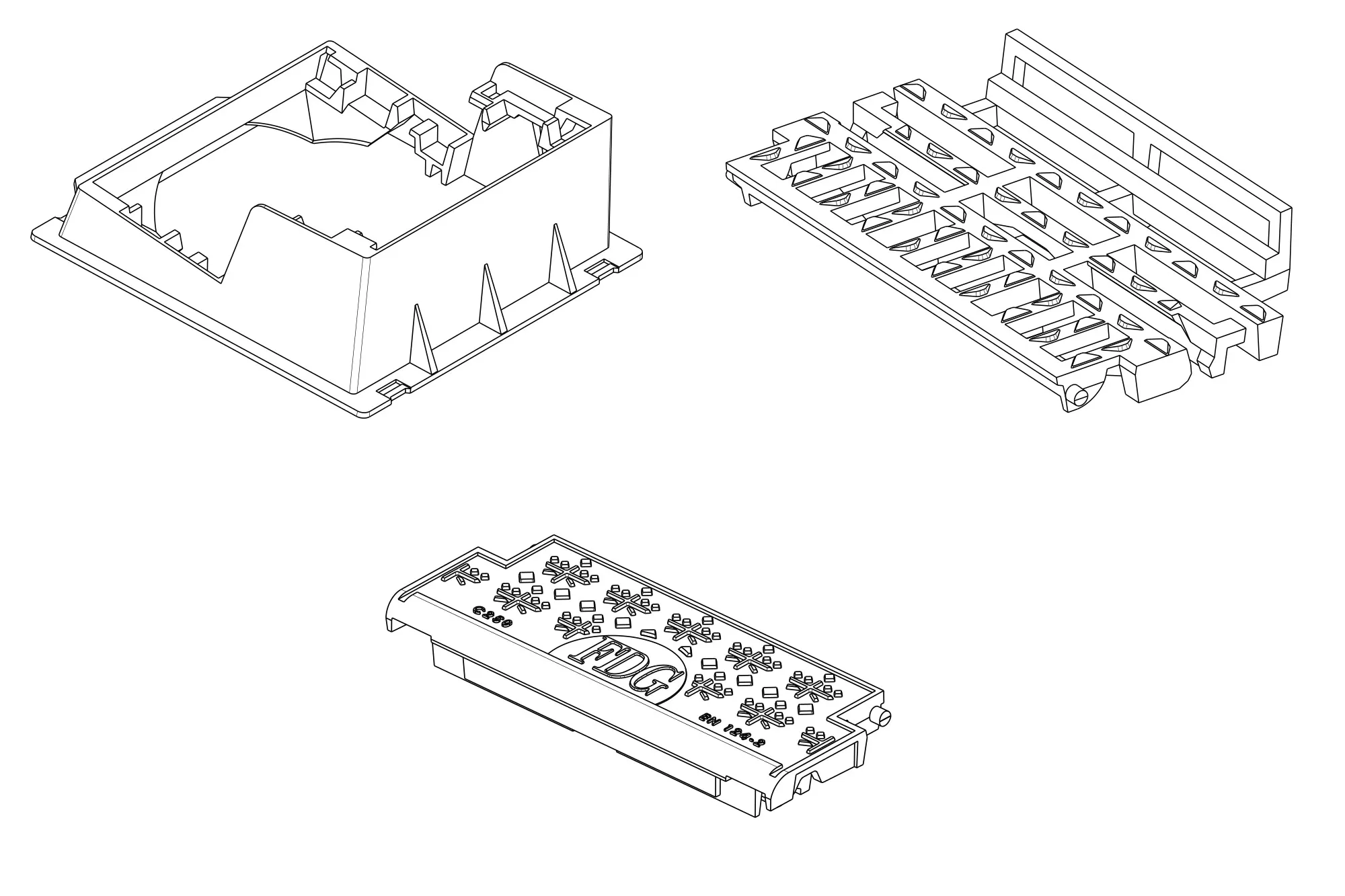
A kerb-edge gully top in three castings — frame, grate and top — supplied as one assembled unit, EN 124-2 C250.
Edge Grating
Ductile iron, EN 124 C250
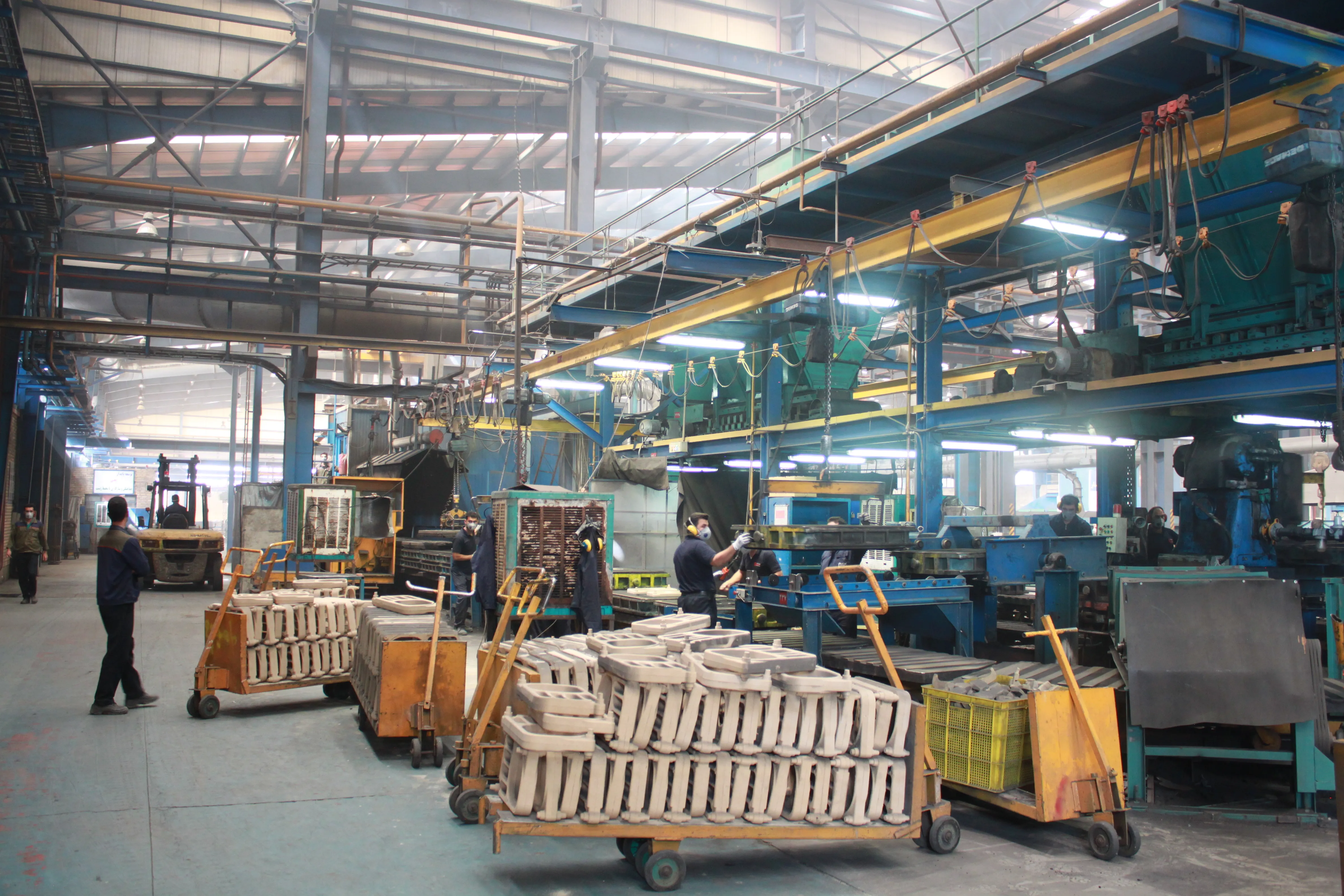
The edge grating sits where the carriageway meets the kerb line and takes water from both directions at once: through the horizontal grate as flow reaches the gully, and through the vertical face as it runs along the channel. That is why it is three castings rather than one. The frame beds into the construction and carries the load, the grate spans the opening, and the top closes the kerb face. All three are cast in the same ductile iron and supplied together as a single item.
- Material
- Ductile iron EN-GJS-500-7 (GGG50)
- Standard
- EN 124-2 C250
- Construction
- Three castings — frame, grate and top — supplied as one assembled item
- Finish
- Bitumen coated
- Tolerance
- ISO 2768-cL
Specifications
1 size, 1 load class
Dimensions in millimetres. Sizes outside this range are produced to order.
International range
| Reference | Frame outer(mm) | Frame depth(mm) | Load class(EN 124) | Weight(kg) | Drawing |
|---|---|---|---|---|---|
| Edge Grating | 610 × 569 | 200.6 | C250 | — | 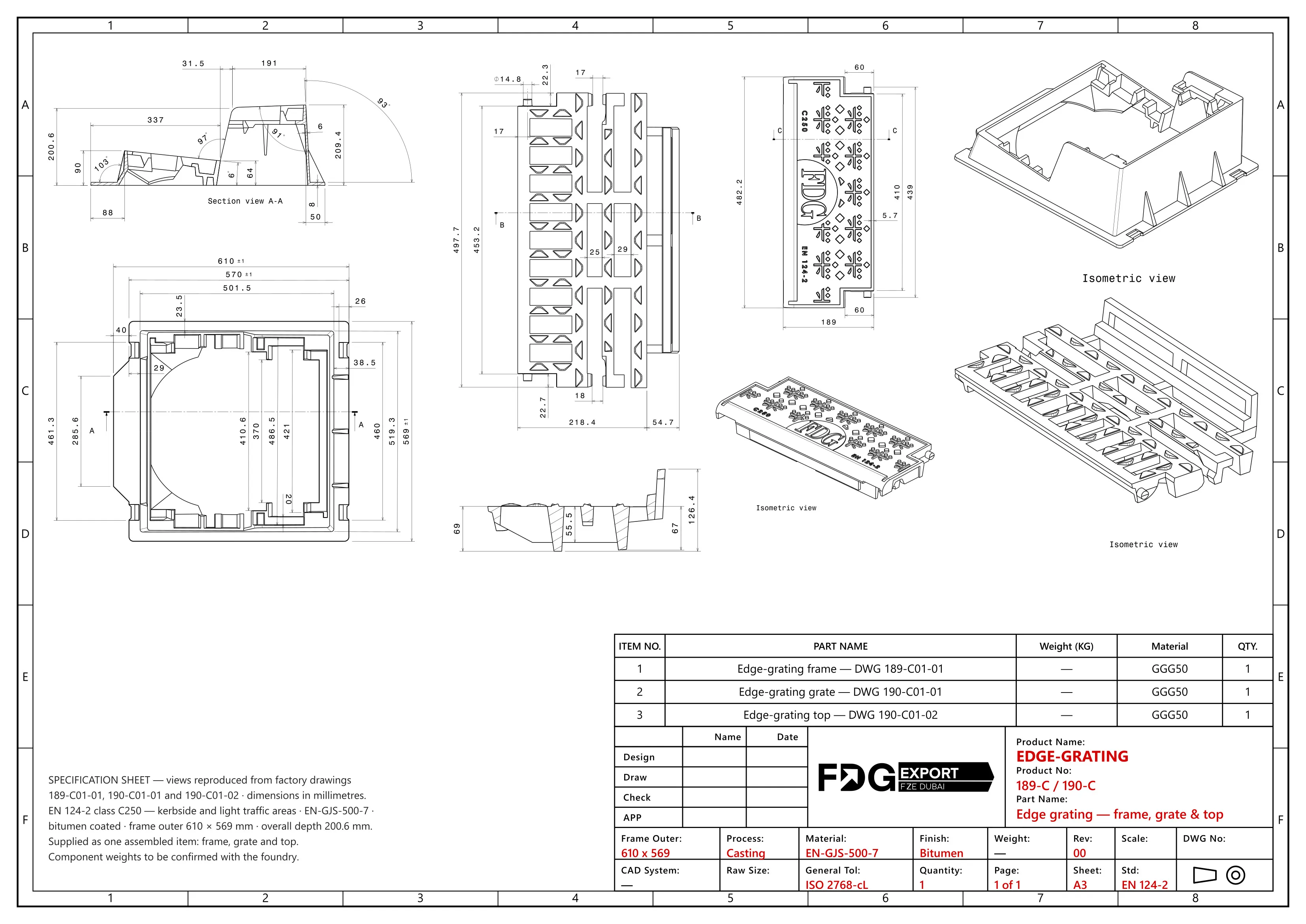 Preview only — contact us for the full drawing or DWG Preview only — contact us for the full drawing or DWG |
One item to EN 124-2, assembled from three castings — frame (189-C01-01), grate (190-C01-01) and top (190-C01-02) — in EN-GJS-500-7 ductile iron, bitumen coated. Frame outer and frame depth are read from the factory drawings; the assembled weight is being confirmed with the foundry and is not published until it is. Full drawings and DWG files are available on request.
Common questions
Specifying gratings
- What is an edge grating for?
- The kerb line. It takes water two ways at once — down through the horizontal grate as flow reaches the gully, and in through the vertical kerb face as it runs along the channel. Where flow only ever falls from above, a flat or concave gully grating is the simpler unit.
- Why is it three castings?
- Because the three do different jobs: the frame beds into the construction and carries the load, the grate spans the opening, and the top closes the kerb face. They are cast separately and supplied assembled as one item.
- What load class is it?
- EN 124-2 C250, rated for a 25 tonne test load, cast into the top face. That is the kerbside class, which is where an edge unit sits by definition.
- What depth do I need to allow?
- 200.6 mm overall for the assembly, in a 610 x 569 mm opening. Send the channel and kerb detail with your enquiry and we will confirm the fit.